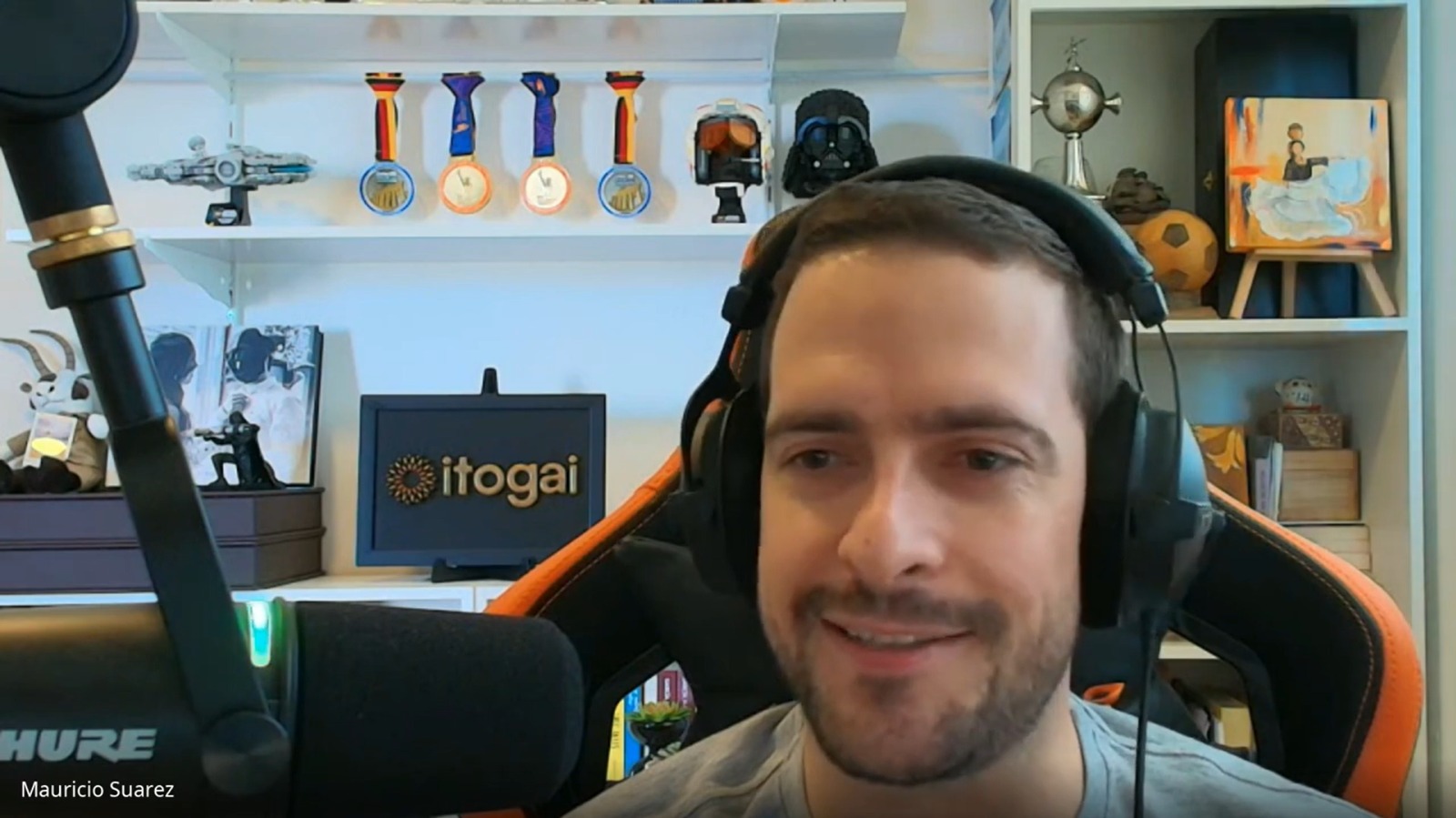
Mauricio Suarez, Landa fellow, hosted a Learning Session where he shared how almost two decades of relationship-led selling turned into a repeatable system for reactivating networks to land referrals. His focus: trust as currency, structured relationship mapping, and knowing when to lean on your network instead of going cold.
🔗 Watch the full session recording here
Built on research from anthropologist Robin Dunbar, who found that humans can only sustain around 150–200 meaningful relationships at once.
Trust Circles apply the same logic across five circles, each with its own cadence:
Mapping 200 relationships feels daunting for most people starting out. His advice: start with 50, split roughly across the five circles, and let the list grow from there.
Used consistently, this structure is how he continues to land referrals without depending on cold outreach.
Mauricio's rule of thumb to land referrals: roughly 80% network-led, 20% cold outreach. Map what you already have before going outbound and the value is often sitting there, dormant.
A distinction he sees confused constantly, even among experienced sellers: ICP is the company, buyer persona is the person. Conflating the two muddies both your targeting and your messaging. For complex, multi-stakeholder deals, he uses a DARCI-style map (Decision-maker, Accountable, Responsible, Support, Consulted, Informed) to figure out who actually needs to be convinced.
"It's not about the warm intro. The warm intro is the outcome. It's about the relationship you take care of that will yield it." — Mauricio Suarez
Relationships are easy to damage and slow to repair. Abuse one, and the cost isn't limited to that person, as it ripples into their extended network too.
The Trust Graph algorithm scores relationships across six dimensions: closeness, trust, strategic value, momentum, network capital, and similarity. Before asking for or making a warm introduction, the real question to land referrals is: what's in it for the person being introduced, and what's in it for the person doing the introducing? Protecting that bridge matters more than any single deal.
Paula Tejeda → Should you prioritize your network over cold outreach, and by how much?
Andres Puente → How do you build the human side of this without it feeling transactional?
Juana Crespo → How do you build a network from scratch in a new country?
Emiliano Valdés → How is the algorithm modeled mathematically, and who's accountable for the value of an intro?
Gabriel Tudela Aramburu → 200 relationships sounds like a lot. What's the realistic minimum to start?
✅ Map your network before you go cold.
✅ Segment relationships into circles, not one big undifferentiated list.
✅ Treat trust as a resource you can deplete. Know the difference between taking care and taking advantage.
✅ Separate ICP (the company) from buyer persona (the person) when planning outreach.
✅ Start small: 50 relationships across 5 circles beats an unmanageable list of 200.
✅ Treat your network as the fastest way to land referrals, not as a backup plan.
❌ Don't assume cold outreach is your only lever, because dormant value is usually already sitting inside your network.
⚡️ Mauricio's session was a reminder that business moves through trust and referrals far more than we give it credit for. The opportunities are often already inside your network, it just takes a system to land referrals consistently.
Founding Member of Landa Club. Founder & CEO of itogai. Host of The Trustbound Podcast. Previously top 1% at HubSpot (175% attainment over 52 quota-carrying months) selling HubSpot’s largest contracts globally in the LatAm segment. LP at Stage 2 Capital and Pygma. Mentor at 500 LatAm and advisor at LAN Accelerator.
Related: How Landa Works