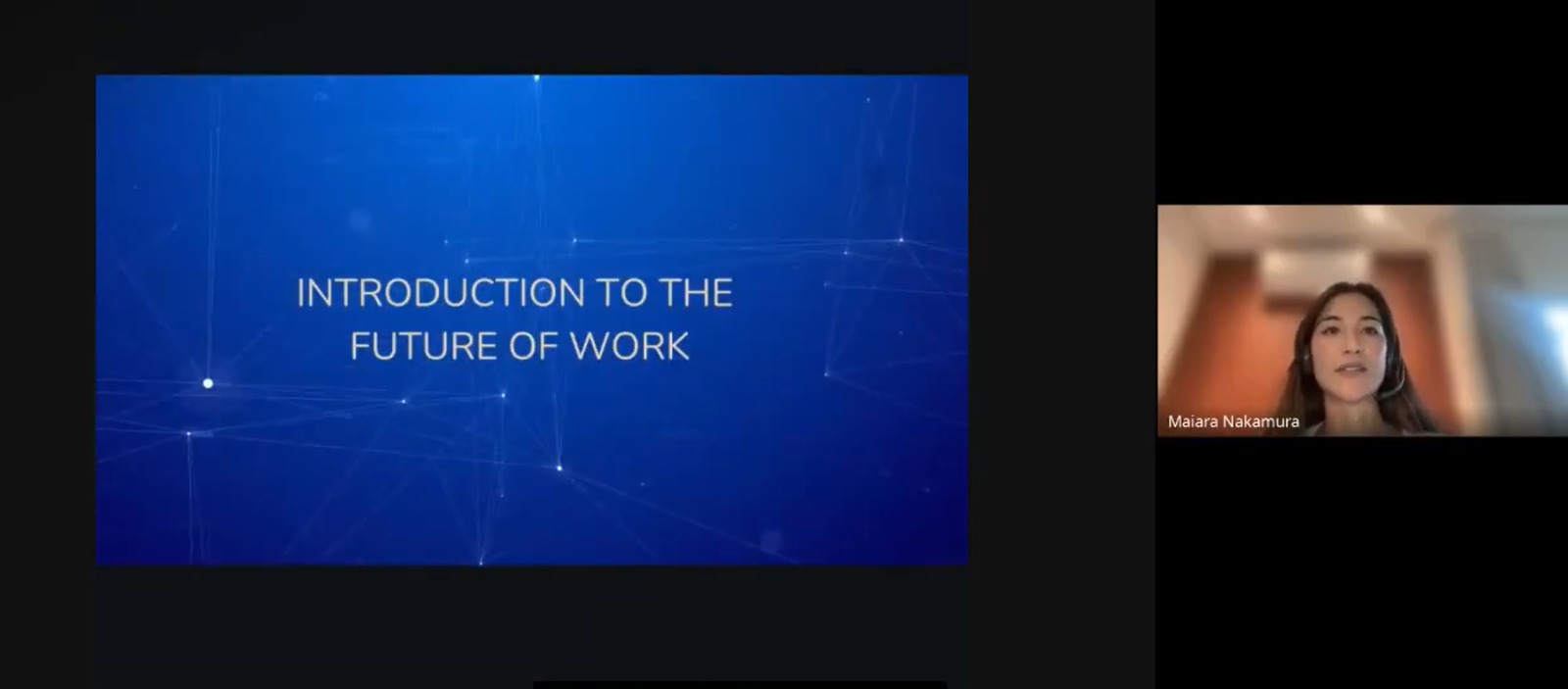
In our latest Landa Learning Session, Maiara Nakamura — 30 years into a career in talent acquisition and recruiting — made the case for personal branding as the real currency of a job market being reshaped by AI.
🔗 Watch the full session recording here
Maiara opened by reframing the question professionals should be asking. Not "what is my job title?" but "what value do I create?" — because titles and skill sets are changing too fast to anchor an identity to. Citing World Economic Forum predictions, she noted that a large share of the workforce will need to reskill or upskill by 2030, and that stability now comes from adaptability rather than from a fixed role.
Drawing on Joshua Buring's framework for AI's evolution, Maiara described work as being redesigned in stages, ending with professionals becoming "super workers" amplified by AI rather than replaced by it.
The future she described is hybrid: you and AI, not you versus AI, with human advantages concentrated in decision quality, creativity, relationships, and strategic thinking, while discrete tasks get automated. She also referenced Ian Bcraft's prediction that skills could shift every six months, making "how fast I adapt" the new performance metric.
If skills shift that fast, the old linear career ladder stops making sense. Maiara argued for a "career portfolio" model built on core skills — thinking skills, self-management, communication — rather than technical skills alone (she specifically called out programming as an "out of focus skill" in this shift).
The portfolio model lets professionals combine consulting, hybrid roles, and industry changes around a stable core of values, strengths, and outcomes, which matters more as markets shift from single companies toward connected ecosystems and platforms.
That shift is already producing new hybrid roles: Growth Career, RevOps, Product Builder, Revenue Management (CRO), and GTM Engineer as examples. All of which combine business understanding, AI leverage, and communication inside increasingly automated ecosystems.
This is where personal branding comes in. Maiara defined personal branding as the shortcut to trust in an age of misinformation: showcasing the specific combination of visible and hidden skills that makes you the obvious choice for the right opportunity. The path to strong personal branding, in her framing, comes down to three steps:
On the practical side, Maiara was specific about LinkedIn optimization. A profile needs to communicate value and build trust fast, with a professional photo and a cover image that matches your niche go a long way.
Beyond that, she stressed using industry-specific keywords that match current market terminology: one client gained immediate visibility simply by changing their title from "Pricing Director" to "Revenue Management."
For showcasing experience, she recommended the TAR (Task, Action, Result) or PAR (Problem, Action, Result) formulas, with numbers serving as the proof behind the claim.
Maiara was direct on this point: most opportunities are never posted. Networking, referrals, and internal conversations carry far more weight, which means proactively mapping your network and connecting with intention rather than waiting for job postings.
She also noted that recruiters search by niche jargon, not generic titles , using "last mile" instead of "logistics" for marketplace roles, for example. That is why the specific language on your profile matters as much as the content behind it.
Guido Galuppo → asked about how to think about building a portfolio.
Jose Antonio Maldonado B. → How do you manage two different professional identities?
✅ Answer "what value do I create," not "what's my job title". Titles are what's changing fastest.
✅ Treat your skills like a portfolio you actively manage, not a ladder you wait to climb.
✅ Use the specific language your market searches for. Niche keywords beat generic titles in recruiter searches.
✅ Show proof, not adjectives: a TAR or PAR structure with real numbers beats a list of skills. ✅ Running two professional identities? Give each one its own channel instead of merging them into one feed.
⚡️ Maiara's session was a reminder that personal branding isn't vanity — it's the fastest way to build trust in a market where job titles change faster than anyone can update their résumé.
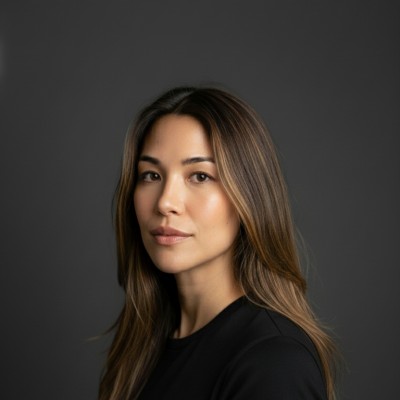
Maiara Nakamura
With 13+ years recruiting for companies like EBANX, SumUp, PicPay, iFood, and Prosus, Maiara breaks down the real factors behind hiring decisions and the signals that place a professional above the rest. Alongside her work with companies, she also runs GEMS, a career advisory platform that helps professionals future-proof their careers through mentorship, skill monetization programs, and AI-driven learning products.